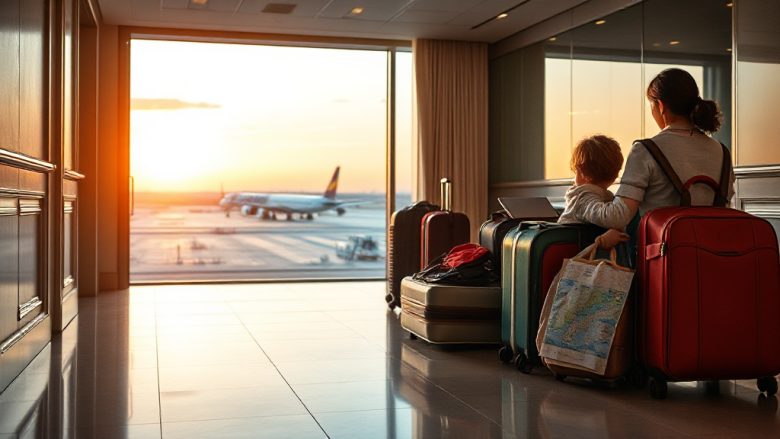
The flight was due to leave at 6:40pm. By 9:15pm my seven-year-old was lying on the airport floor using her backpack as a pillow, and my four-year-old had decided that the moving walkway was the only entertainment worth having. That scene, not the sunsets or the pool photos, is what expert advice on family travel is really for. Anyone can plan a holiday that works when everything runs on time. The skill is building a trip that still holds together when the airline texts you a delay and the snacks run out.
What follows is the checklist I use now, after too many trips to count with children of different ages. It’s organised by stage, because the decisions that cause the most stress happen long before you leave the house. Some of it you can control. Some of it you can only prepare for. Knowing the difference is most of the battle.
Before You Book: Decide What Kind of Trip This Actually Is
Most family travel arguments start with mismatched expectations, not bad destinations. One parent is picturing long dinners and a bit of culture; the other is picturing a kids’ club and a sun lounger. Sort that out before you compare prices, because it changes everything downstream.
Ask what the trip is for. A week at a resort where the children are entertained and you read three books is a different animal from a city break where you’re all walking ten miles a day. Neither is better. But if you book one while expecting the other, someone will spend the holiday quietly resentful, and it won’t be the toddler.
Then look hard at the ages you’re travelling with. A baby is portable and forgiving of schedule changes. A three-year-old is neither. A ten-year-old can handle a museum if you feed them first and cap it at ninety minutes. Teenagers need Wi-Fi, sleep, and the illusion that they chose to be there. If your group spans all of those, you’re planning several holidays at once, and the itinerary has to admit that.
A few things worth checking before you commit:
- Flight times matter more than flight prices — a 6am departure with small children costs you a night’s sleep and a full day of everyone being miserable.
- Check transfer times honestly, not optimistically; two hours in a hot minibus after a long flight is a real cost.
- Look at what’s within walking distance of where you’d stay, because the ability to step outside for an hour without a plan saves afternoons.
- Read the cancellation terms properly, especially if anyone in the family is prone to ear infections or last-minute illness.
- Consider whether you want a kitchen; being able to make toast at 7am without paying hotel prices changes the mood of a whole morning.
One more thing: book fewer things than you think you should. The instinct to fill every day comes from fear of wasting the money you spent getting there. In practice, the empty afternoon is usually the one everyone remembers fondly.
Packing Day: Build Around the Weakest Link
Packing for a family isn’t about volume. It’s about anticipating the specific moment when someone will be cold, hungry, bored, or wet, and having the answer already in the bag.
The weakest link is usually the youngest traveller, so pack their needs first and let everyone else’s stuff fill the gaps. Spare clothes for the child who spills, not for the adult who probably won’t. A thin fleece for each person, because aeroplanes and evening air are colder than people expect. Snacks that don’t melt, don’t crumble, and aren’t so exciting that they get eaten before the flight even boards.
Layers beat outfits. If you pack for three days and do laundry once, you can travel for a fortnight with a carry-on each. This is not about being smug; it’s about not standing at a baggage carousel at midnight with a tired child wondering where your suitcase went.
For the journey itself, the goal is novelty plus comfort. A small toy the child hasn’t seen before buys you twenty minutes. A familiar blanket buys you a nap. Headphones that actually fit small ears are worth more than any tablet game. And pack the chargers in the bag you keep with you, not the one in the hold, because a dead device at hour four of a delay is a genuine emergency.
Documents deserve their own moment. Passports, any letters you need for a child travelling with one parent, insurance details, and the phone numbers you might actually need. Keep a photo of each document on your phone as well as the paper copy. It’s the kind of preparation you’ll never need, until you do.
On the Road: Protect the Downtime
Here’s the part most itineraries get wrong. Children don’t need constant stimulation. They need recovery, and so do you. A trip with no downtime is a trip where everyone is running on empty by day four.
Build in a slow morning every second or third day. No alarms, no plan, nowhere to be. Let the children play in the pool or the park or the hotel room while you sit down properly. This isn’t laziness. It’s the maintenance that keeps the rest of the trip enjoyable.
Meals are downtime too, if you let them be. Eating at the same time each day, even roughly, gives children a rhythm to trust. It also stops the blood-sugar crash that turns a lovely afternoon into a meltdown on a cobbled street. Carry water always. Feed people before they’re hungry and rest them before they’re tired, and you’ll avoid most of the trouble that gets blamed on the destination.
When you do plan an activity, keep it short and go early. Museums, markets, and viewpoints are all better at 9am with fewer people and cooler air. Leave the afternoon free for whatever the day offers. If the children are happy in the water, stay in the water. The cathedral will still be there next time.
When Things Go Wrong: The Delay, the Illness, the Lost Bag
Something will go wrong. That’s not pessimism; it’s arithmetic. Over enough trips, the odds catch up. The delay, the upset stomach, the bag that doesn’t arrive, the day the rain doesn’t stop. What matters is how quickly you can shift from frustrated to practical.
First, deal with the body in front of you. A tired or hungry child cannot process a changed plan. Sit down, feed them, let them move. Only then work out the new arrangements. This sounds obvious and it’s the thing most of us forget in the moment.
Second, remember what you actually control. You don’t control the weather, the airline, or whether the restaurant is closed on Mondays. You do control whether you have a backup snack, a spare charger, a change of clothes, and the willingness to abandon a plan that isn’t working. That last one is the real skill. The day is not ruined because you didn’t see the thing. It’s ruined if you spend three hours forcing it on people who are done.
Third, keep a small buffer of money and time for exactly these moments. A taxi when the bus doesn’t come. A hotel night when a connection fails. A bit of slack in the schedule so a two-hour delay doesn’t cascade into missing everything.
What You Genuinely Cannot Control — and Should Stop Trying To
Some of the worst family travel stress comes from trying to manage things that were never yours to manage. You can’t guarantee good behaviour from a child who has been awake since 4am. You can’t guarantee sunshine. You can’t guarantee that the restaurant you researched will be open, or that the flight will leave on time, or that everyone will enjoy the same things.
Accepting that is not giving up. It’s redirecting your energy toward the things that do respond to preparation. You can have the snacks. You can have the spare clothes. You can have a plan B that’s genuinely restful rather than another forced outing. You can decide, in advance, that a bad hour doesn’t define a good trip.
Children pick up on how the adults are coping. If you treat a delay as an adventure with a bench and a packet of biscuits, they’ll mostly follow your lead. If you treat it as a catastrophe, so will they. That’s not about pretending everything is fine. It’s about showing them that plans change and we handle it.
The Small Habits That Make the Biggest Difference
After enough trips, a few habits start to do most of the work. They’re not glamorous, but they’re the reason some families seem to glide through airports while others are visibly fraying.
Travel light enough to move quickly. One bag each, wheels where you can, hands free for the child who suddenly needs carrying. Book the seats together, even if it costs a little, because separation on a plane is its own kind of stress. Arrive early rather than optimistically, and treat the waiting time as part of the trip rather than a failure of planning.
Keep a running note on your phone of the things that worked and the things that didn’t. Which snack survived the journey. Which day was too full. Which hotel had the pool that saved the afternoon. Next time, you’ll plan from evidence instead of hope.
And lower the bar for what counts as a good day. One thing that went well, one meal without complaint, one moment where everyone was content at the same time — that’s a successful day of family travel. The rest is just logistics.
Closing the Checklist: Prepare, Then Let It Go
Back to that airport floor. The delay wasn’t the problem in the end. The problem was that we’d arrived tired, under-fed, and with no plan for the waiting. The next time it happened, we had a charged tablet, a bag of snacks, and a spare jumper each. The delay was still annoying. It just wasn’t a disaster.
That’s the honest version of expert advice on family travel. You prepare the things you can — the timing, the packing, the downtime, the buffer for when it all slips — and then you let go of the rest. You won’t get every trip right. Nobody does. But if you’ve thought about the weak points in advance, the bad moments stay small, and the good ones get the room they need.